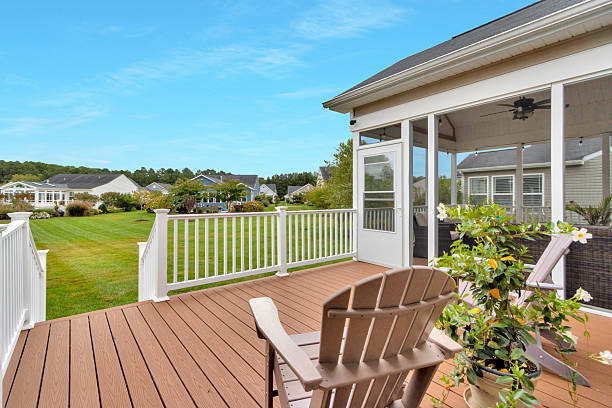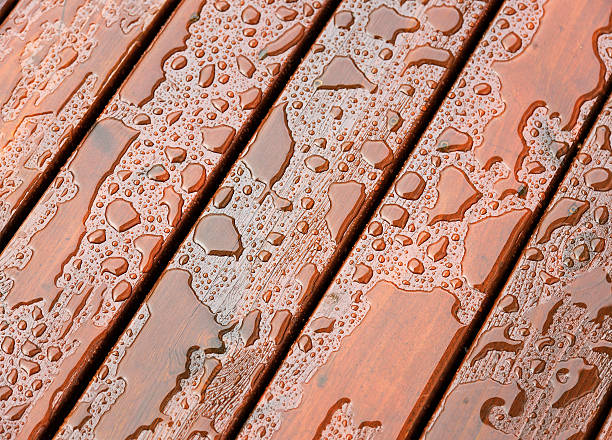
Wet deck joists are not automatically a sign of trouble. Most outdoor decks encounter rain, snowmelt, and changing humidity. Water can pass through the gaps between deck boards and reach the framing underneath.
The bigger concern is wood that stays wet, gets repeatedly soaked in the same place, or shows signs of deterioration. Knowing what to watch for can help you distinguish routine weather exposure from a moisture problem that deserves professional attention.
Is it normal for deck joists to get wet?
Yes. Unless a drainage layer intercepts water above the framing, rain can reach the joists beneath the deck boards. The important question is what happens afterward.
Do the exposed surfaces begin drying as the weather improves? Does water drain away, or collect against the wood? Is one connection consistently wetter than the framing around it?
Wood exchanges moisture with its surroundings, and drying depends on temperature, humidity, and the moisture already inside it. A damp joist after a storm does not establish whether rot is present. US Forest Service Research and Development
How long can deck joists stay wet?
There is no single safe number of hours or days for every deck. Drying varies with the weather, wood dimensions, exposure, and the way the deck is built. A shaded beam connection may behave differently from an exposed joist with air moving around it.
The useful distinction is between occasional wetting followed by drying and persistent moisture without a meaningful drying period. Wood-decay fungi need suitable conditions, including moisture and temperature, to grow. Repeated or prolonged wetness deserves investigation because it can support those conditions. US Forest Service Research and Development
Rather than relying on a countdown after rain, watch for recurring patterns.
Signs that deserve a closer look
A wet spot that persists between storms
If one area remains damp while nearby wood dries, look for a local water source. Possibilities include a leak at the house connection, an overflowing gutter, debris holding water, or an outlet discharging onto the framing.
Photograph the location and note when it becomes wet. Those observations can help an installer or inspector trace the cause.
Soft, crumbling, or visibly deteriorated wood
Wood that feels soft or spongy, crumbles, or has lost material warrants professional evaluation. NADRA’s homeowner checklist identifies soft wood and other signs of decay as reasons for concern. Its checklist covers joists, support posts, and the ledger where the deck attaches to the house. NADRA
Avoid cutting, drilling, or aggressively probing structural framing to investigate it yourself. A deck professional can determine the extent of damage and whether repair or replacement is needed.
Problems around connections
Pay attention to joist ends, hangers, beam connections, and the ledger. Visible deterioration around a connection matters because both the wood and the hardware contribute to the deck’s support.
Loose or pulling fasteners, significant corrosion, separation at connections, or unusual sagging call for an inspection. If the deck appears unstable or a structural member is visibly compromised, keep people off and away from it until it has been assessed. NADRA emphasizes that deck evaluation requires knowledge of both structural deterioration and fastening details. North American Deck & Railing Association
Does dark wood mean the joist is rotting?
Not necessarily. Weathering, surface staining, mold, and decay can affect appearance in different ways. Color alone cannot establish whether a joist remains structurally sound.
Likewise, a clean-looking surface does not rule out hidden deterioration. Treat appearance as one observation alongside persistent moisture, softness, changes in shape, and the condition of connections. A professional assessment is particularly useful when several warning signs occur together.
Can a moisture meter help?
A wood moisture meter can help identify patterns, especially when readings are taken consistently at several locations over time. But a reading is not a structural diagnosis.
Meter results can be affected by wood species, temperature, chemical treatment, moisture distribution, and how the tool is used. Surface water can also complicate interpretation. Follow the meter’s instructions and have questionable results interpreted as part of a broader inspection. US Forest Service Research and Development
A single low reading does not prove a joist is undamaged, and a high reading does not establish that decay has occurred.
Why might joists remain wet?
Persistent moisture often comes from a combination of continued wetting and limited drying. Check for:
- Leaks or concentrated runoff: Water repeatedly reaches the same section of framing.
- Blocked drainage: Gutters or outlets cannot carry collected water away.
- Debris accumulation: Leaves or dirt hold moisture against wood.
- Restricted drying: A ceiling or enclosure changes air movement around the joists.
- Weather conditions: Repeated rain and humid air reduce drying opportunities.
Correcting the source is important. Simply covering a wet area or adding a fan without understanding the water path may leave the underlying problem unresolved.
What if you have an under-deck drainage system?
A dry patio does not necessarily mean every joist above it stays dry. With a below-joist system, rain may contact framing before reaching the panels. Ask how the assembly manages that exposure and supports drying around the wood.
RainTeck is designed to combine undermount drainage with joist ventilation and a finished ceiling. Its installation should follow the approved details for the particular deck, with access for maintenance and inspection.
Before adding any ceiling beneath an older deck, have persistent wet areas and questionable framing assessed. A new drainage system cannot restore wood that has already deteriorated.
What should you do next?
For damp joists without obvious damage, start by observing the deck through a wetting-and-drying cycle. Check accessible gutters and outlets, record persistent wet spots, and arrange an inspection if the pattern continues.
For soft wood, deteriorated connections, unusual movement, or sagging, seek professional evaluation promptly. Do not assume that drying the surface will resolve structural damage.
Regular inspection helps catch changes. NADRA recommends yearly homeowner checks and encourages professional deck inspections where appropriate. NADRA
Wet deck joists deserve attention when the moisture persists or the wood begins to deteriorate. Focus on the source of water, opportunities for drying, and the condition of the structure so any repair addresses the cause as well as the damage.
Sources
USDA Forest Products Laboratory. Wood Moisture Relations (2010).
USDA Forest Products Laboratory. Biodeterioration of Wood (2021).
USDA Forest Products Laboratory. Drying and Moisture Control (2021).
NADRA. Deck Safety Tips.
NADRA. Deck Evaluation Guide.
NADRA. Deck Safety.
USDA Forest Products Laboratory. Wood Moisture Meters.
NADRA. Check Your Deck.