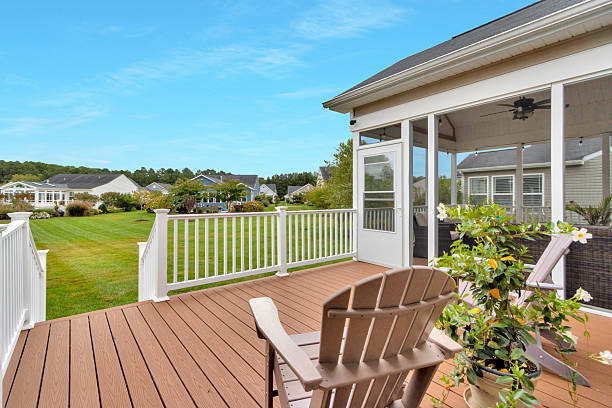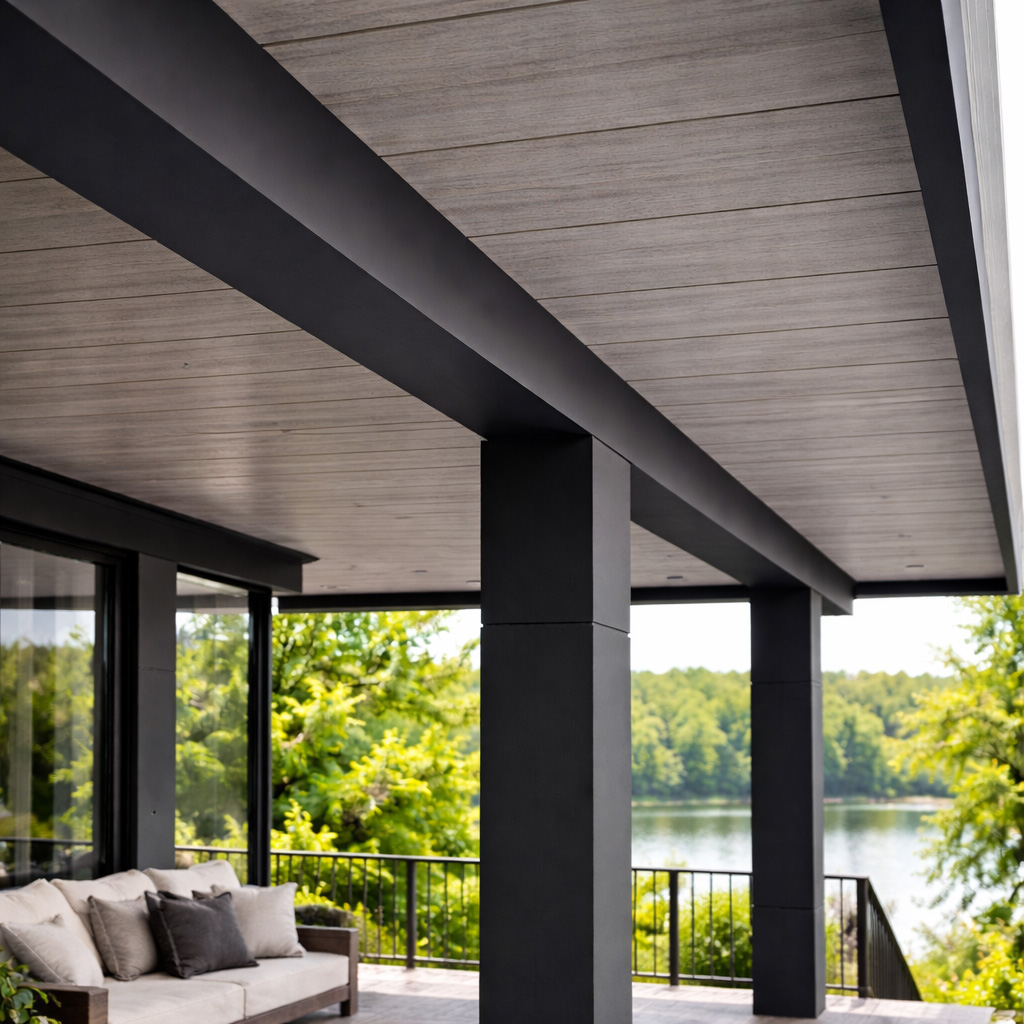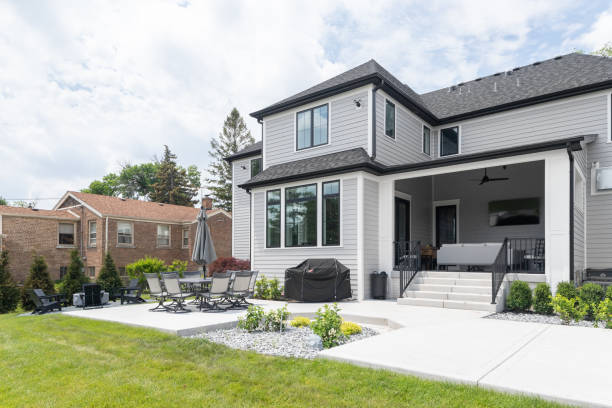
Yes, many existing elevated decks can be fitted with an under-deck drainage system. The work involved depends largely on where the system is installed. Some systems attach beneath the joists, allowing installers to work from below. Systems installed above the joists generally require the deck boards to be removed first. The condition and layout of your deck matter just as much as the product you choose.
If you want to turn the area under your deck into a patio, seating area, or more useful storage space, start by understanding the two installation approaches.
Installing a system beneath an existing deck
An undermount system collects water after it passes through the gaps between deck boards and the framing. Panels or channels beneath the deck direct that water toward an outlet, often connected to a gutter.
Because installers can work from below, this approach may allow the existing deck boards to stay in place. TimberTech, for example, says its DrySpace system attaches to new or existing deck joists and can be retrofitted to many existing decks. That does not mean every deck is automatically compatible; the product’s installation requirements still have to be checked against the structure.
RainTeck is also an undermount system designed to combine drainage, joist ventilation, and a finished ceiling. For a homeowner considering RainTeck, an installer should confirm that the existing framing, available clearance, and planned water outlet suit the system before promising a particular installation method.
What if the system goes above the joists?
An above-joist system catches water beneath the deck boards, before it reaches most of the framing. On a deck that is already built, the installer needs access to that layer. Trex RainEscape states that existing deck boards must be removed to install its above-joist system. FAQs
That can make sense if you are already replacing worn decking. The boards are coming off anyway, giving the installer an opportunity to inspect the framing and add drainage before the new boards go down. If the existing boards are in good condition and you want to keep them, removal is a larger part of the project to consider.
What should be checked before installation?
A drainage system can improve the usefulness of the space below, but it cannot repair an aging deck. Have the structure assessed before covering the underside, particularly if you have noticed soft wood, loose connections, persistent dampness, or visible damage. Structural concerns call for evaluation by a qualified deck professional.
An installer should also look at:
- Joist layout and access. Spacing, blocking, beams, and other framing details affect how components fit.
- Deck height. The system and its required slope need room beneath the framing without making the space below impractical.
- The water outlet. Collected water needs a suitable path away from the under-deck area and the house.
- The house connection. The area where the deck meets the home deserves careful attention so the new work does not interfere with existing water management.
- Future maintenance. Ask how gutters, outlets, and other parts of the system can be inspected and cleaned.
These are project-specific checks. Follow the chosen manufacturer’s instructions rather than assuming that a method used on another deck will work on yours. TimberTech, for instance, directs installers to review its DrySpace installation guide for retrofit projects.
Will a drainage system keep the deck joists dry?
That depends on the system’s position and design. With a below-joist system, rain can pass over or around the framing before it reaches the drainage panels. Ask how the assembly manages both water runoff and drying around the joists. Wood exchanges moisture with the surrounding air, so the ability of wet framing to dry is an important part of the design. research.fs.usda.gov
This is one of the questions RainTeck is designed to address: it pairs an undermount drainage path with joist ventilation. The exact airflow and installation details should be explained using the approved RainTeck specifications for your deck.
Do you have to replace your deck boards?
Not necessarily. A compatible undermount system may be installed from below while the boards remain in place. An above-joist system generally needs the boards removed to reach the top of the framing. If the deck boards or framing are deteriorated, however, those issues should be addressed as part of the project regardless of which drainage system you select.
The takeaway
You do not need to build a new deck to consider under-deck drainage. Many existing decks can accommodate a system, and an undermount option may offer a path that does not require removing sound deck boards. The next step is to have an installer check the structure, confirm product compatibility, and plan where the collected water will go. That assessment will tell you what is practical for your deck and the space you want to create beneath it.
Sources
Trex RainEscape. Frequently Asked Questions.
USDA Forest Products Laboratory. Wood Moisture Relations (1999)