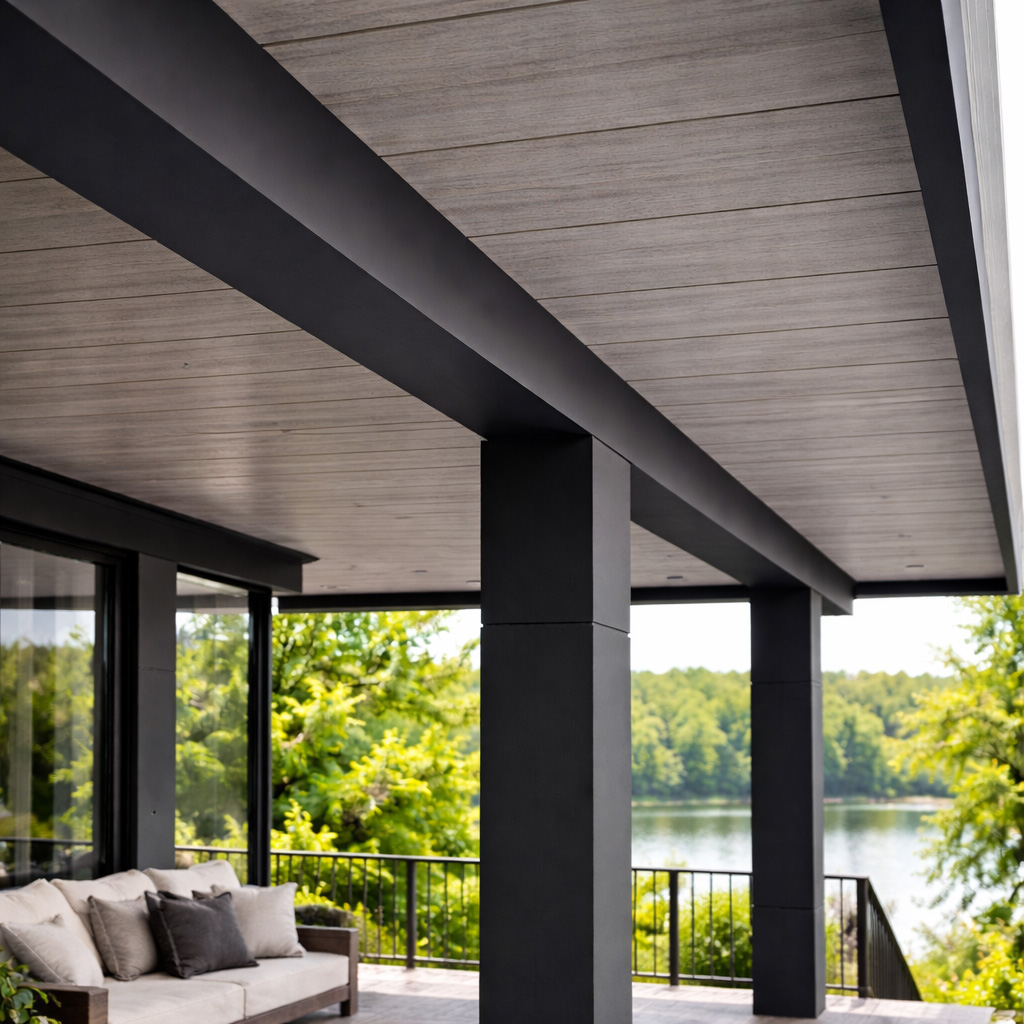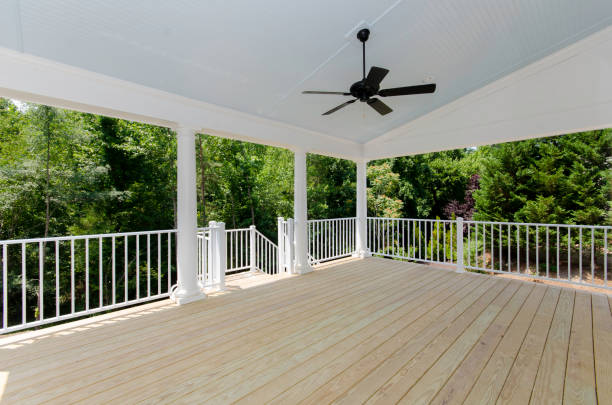
Look up from the patio beneath an elevated deck and you will usually see joists, beams, and the underside of the deck boards. An under-deck ceiling covers some or all of that exposed structure to give the space below a more finished appearance.
Many homeowners also want that ceiling to keep rain from dripping onto the patio. That is where the terminology gets confusing: some under-deck ceilings are part of a drainage system, while others are a finish installed beneath a separate drainage system. Understanding what is above the visible panels is the key to understanding how the whole space works.
How does water reach the ceiling?
Most deck boards have gaps between them. When it rains, water passes through those gaps into the structure below. Without a planned drainage route, it can drip through the joists onto the patio, furniture, or anything stored underneath.
A water-managing under-deck assembly collects that rain on sloped troughs or panels and directs it to an outlet, often a gutter and downspout. RainTeck uses vinyl panels to collect and channel water away from the area beneath the deck; Trex RainEscape uses troughs and downspouts above the joists so a separate ceiling can be installed below.
The ceiling is therefore part of a larger question: Where does the water land, and where does it go after that?
Two ways an under-deck ceiling can be built
A drainage system with a separate finished ceiling
In this arrangement, the drainage components are installed higher in the deck assembly. A separate ceiling or soffit is then added below to conceal the structure and create the desired look.
This gives homeowners a choice of ceiling finish, but it also means the drainage system and ceiling are distinct parts of the project. Some systems installed above the joists are designed with room for a finished ceiling underneath.
Drainage panels that form the visible ceiling
In other systems, the underside of the water-collecting panels is what you see from the patio. The panels serve two purposes: they direct rainwater away and give the space a finished appearance.
RainTeck is designed around this combined approach. Its undermount panels provide the finished ceiling appearance, with woodgrain-streaked vinyl options, as part of a system that also addresses drainage and joist ventilation.
Neither arrangement is automatically right for every deck. The best fit depends on whether the deck is new or existing, the framing layout, the available height below, and the finish you want.
Can you add a ceiling beneath an existing deck?
Often, yes. Products designed to attach beneath existing joists can be installed from below, subject to the deck’s condition and the product’s requirements. Some above-joist drainage systems, by comparison, require removing the deck boards to install the drainage layer.
Before covering an older deck’s underside, have its framing inspected. A ceiling can hide joists from everyday view, but it does not fix damaged wood, poor drainage near the house, or loose structural connections.
What happens to moisture around the joists?
This is an important question for any finished under-deck assembly. In an above-joist system, the drainage layer catches much of the water before it flows into the joist bays. In a below-joist system, rain may reach the framing before it lands on the drainage panels.
Ask the installer how the selected design handles water and how wet framing can dry. Wood’s moisture content changes with environmental conditions, and moisture management is relevant to its long-term condition. The answer should come from the particular system’s design and installation details rather than an assumption that every ceiling works alike. US Forest Service Research and Development
Joist ventilation is one of RainTeck’s intended functions alongside water diversion. Its product documentation and installer guidance should establish how that ventilation is provided on a specific deck.
Does an under-deck ceiling make the space waterproof?
A properly designed drainage system can keep much of the rain falling through the deck from reaching the area directly below it. But the space is still outdoors. Wind-driven rain can enter from the sides, and water can flow across the ground or splash in from nearby surfaces.
A ceiling also should not be assumed to handle rain simply because its panels are made from a moisture-resistant material. Look for a complete drainage path with the slope, outlet, and maintenance access required by the manufacturer.
What should you consider before choosing one?
Think about the finished space and the parts you will rarely see:
- Appearance: What will the ceiling look like from below? Are color and finish options available?
- Installation: Can the system be fitted to your existing deck, or will boards need to come off?
- Water discharge: Where will the collected rain go after it reaches the edge of the deck?
- Framing: Has the structure been inspected, and how does the assembly address moisture around the joists?
- Access: How will you inspect or clean the drainage components later?
- Other features: If you want lighting or a fan, plan their placement and electrical work with qualified installers. Follow the ceiling system’s instructions for what can be attached to it.
The takeaway
An under-deck ceiling is the finished surface you see when standing beneath an elevated deck. It may be a separate finish below a drainage system, or the drainage panels themselves may create that finished look.
If your goal is a drier, more usable patio, choose the complete water-management assembly, not the ceiling appearance alone. Find out how it collects rain, where it sends that water, what it means for the deck framing, and what the installed ceiling will look like.
Sources
Trex RainEscape. Under-Deck Drainage System.
Trex RainEscape. Frequently Asked Questions.
USDA Forest Products Laboratory. In-Service Wood Moisture Conditions.
USDA Forest Products Laboratory. Drying and Moisture Control (2021).