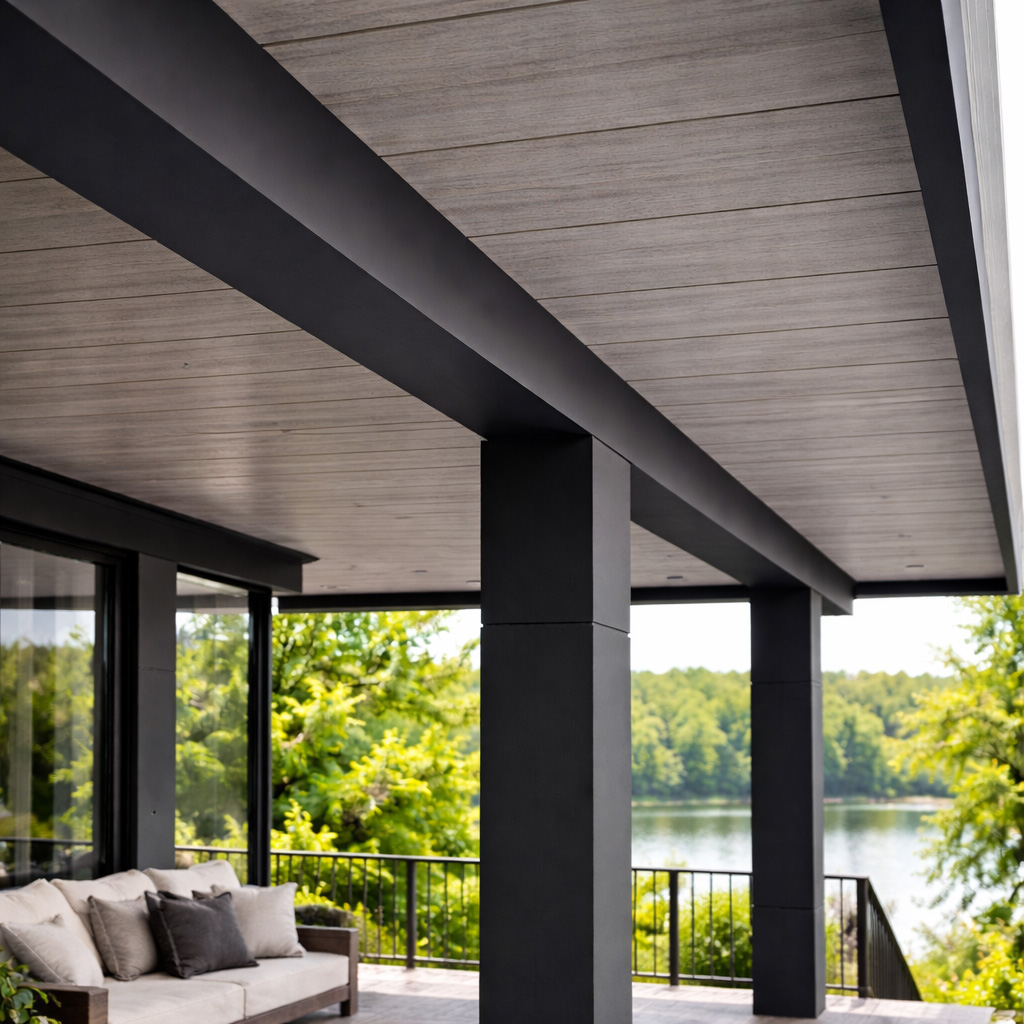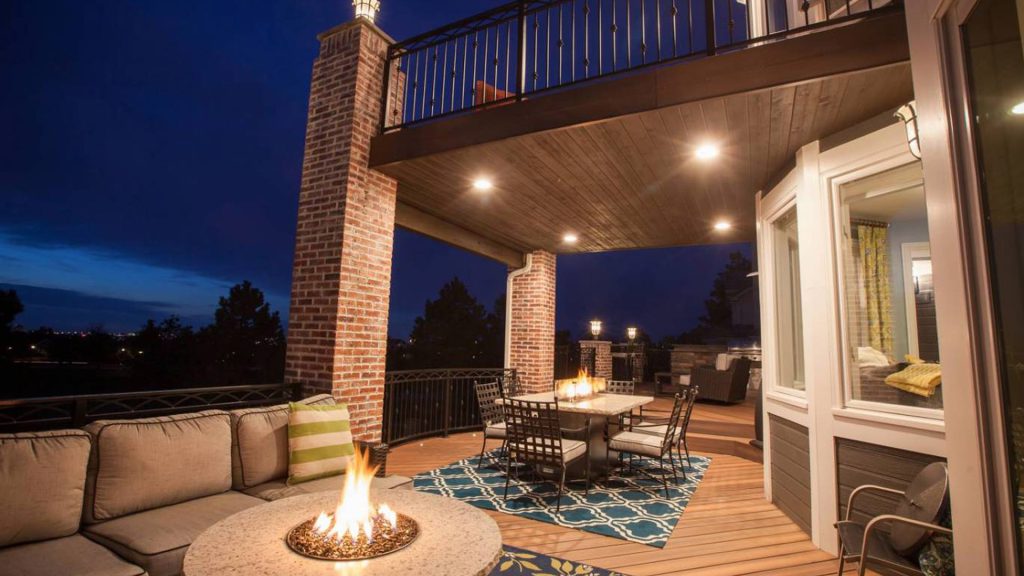
An under-deck ceiling can contribute to a moisture problem if water gets into the space above it and cannot drain or dry adequately. But the presence of a ceiling does not automatically mean the deck will develop rot or mold. The outcome depends on the full assembly: where rain travels, how it leaves the deck, how the framing dries, and whether the system is installed and maintained as designed.
If you are considering a finished ceiling beneath your deck, those details deserve as much attention as the ceiling’s appearance.
Why is there moisture above an under-deck ceiling?
Most deck boards have gaps. Rain passes through them and reaches the area around the joists, unless a drainage layer above the framing intercepts it first. With a below-joist drainage system, water may contact the framing before landing on the panels beneath it.
A well-planned system gives that water a path toward a gutter or outlet. At the same time, the assembly needs to account for moisture remaining on or around the wood after a storm. Wood exchanges moisture with the surrounding air, so conditions that permit drying matter. research.fs.usda.gov
The concern is not that a ceiling somehow creates water. It is that a poorly detailed assembly could admit water, hold it in unwanted places, and make problems harder to notice.
Does a below-joist ceiling always trap moisture?
No. Below-joist systems vary in their panel shape, slope, edge details, and provisions for airflow. It would be inaccurate to assume they all behave the same way.
Some manufacturers specify details intended to manage both drainage and ventilation. For example, TimberTech’s DrySpace installation guidance calls for a sloped drainage path and includes perimeter spacing instructions. Those requirements illustrate why an installer should follow the design of the particular system instead of simply fastening panels beneath a deck and assuming the job is complete.
Ask the manufacturer or installer to show you how water leaves the panels and how the area around the framing is intended to dry.
When does the risk increase?
Moisture deserves closer attention when:
- Water has no clear outlet. A blocked gutter, inadequate slope, or poorly placed discharge can allow water to linger.
- Wood is enclosed while already wet or damaged. Covering the underside can conceal a problem that should have been addressed first.
- Drainage details are incomplete. Water may bypass the intended panels at edges, posts, or other interruptions.
- The assembly restricts drying. An installer should be able to explain the airflow or other drying provisions called for by the system.
- The system cannot be inspected. A finished look should still allow reasonable access to check for leaks and maintain drainage components.
The U.S. Environmental Protection Agency advises designing moisture-sensitive assemblies so they can dry and avoiding the enclosure of wet materials. Although its general building guidance is broader than decks, the underlying moisture-management principle applies here. epa.gov
Can moisture lead to wood rot?
Wood rot involves more than a single rainy day. Decay fungi need suitable conditions, including sufficient moisture, to grow. The U.S. Forest Service identifies sustained moisture as an important factor in wood decay. That is why managing repeated wetting and providing a way for framing to dry are relevant to an under-deck project. research.fs.usda.gov
Do not assume that a stain proves structural rot, or that a clean-looking ceiling proves the framing above it is sound. If joists feel soft, show significant deterioration, or raise any structural concern, have a qualified professional assess the deck.
What about above-joist drainage?
An above-joist system collects water beneath the deck boards before much of it enters the joist bays. That changes the framing’s exposure to rain compared with a system that collects water below the joists. It still requires correct installation, a reliable outlet, and attention to the areas where water might bypass the drainage layer.
The useful comparison is therefore not simply ceiling versus no ceiling. It is the complete route water takes through the deck and the options the framing has to dry.
How does RainTeck address this question?
RainTeck is designed as an undermount drainage system that combines water diversion, joist ventilation, and a finished ceiling. The ventilation function is intended to address the concern homeowners may have about enclosing damp framing beneath a below-joist system.
For publication, the description of precisely how air moves through RainTeck, and any claims about its effect on drying or rot risk, should match approved product diagrams and technical documentation. An installer should also assess the condition of the existing joists before fitting the system.
Questions to ask your installer
Before installing any under-deck ceiling, ask:
- Where does rain go after it passes through the deck boards?
- What slope and outlet does the system require?
- Can water reach the joists, and how are they intended to dry?
- Has the existing framing been inspected for damage?
- How will the system be cleaned and inspected after installation?
- What happens at the deck edges, beams, posts, and house connection?
Clear answers are more valuable than a blanket promise that a ceiling is “waterproof.”
The takeaway
An under-deck ceiling can be part of a well-designed drainage system. Moisture problems become more likely when water is allowed to collect, wet framing is covered without assessment, or the assembly lacks the drainage and drying details it needs.
Choose a system for the whole deck, including the framing above the visible ceiling. Then make sure it is installed according to its approved instructions and remains accessible for inspection.
Sources
USDA Forest Products Laboratory. Wood Moisture Relations (1999).
TimberTech. DrySpace Water Management
U.S. EPA. Moisture Control Guidance.
USDA Forest Products Laboratory. Durability of Wood in Construction. USDA Forest Products Laboratory. Drying and Moisture Control (2010)