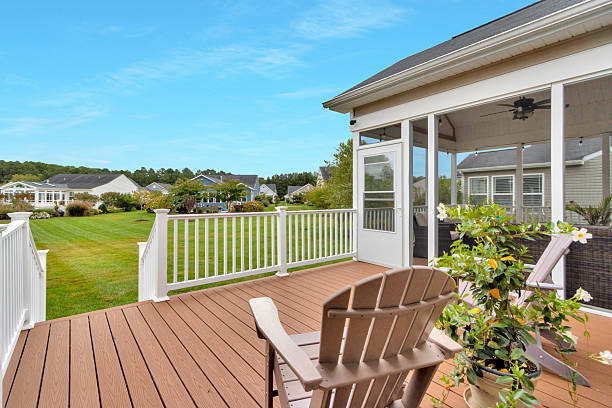
After a rainstorm, the puddles on your patio may disappear before the deck joists above it have finished drying. Water can soak into wood, and moisture inside a joist takes time to move back out.
Air movement can support drying by carrying moisture away from the wood’s surface. But airflow works alongside temperature, humidity, and the way the wood is exposed. Understanding that process helps explain why drainage and ventilation both deserve attention when finishing the space beneath a deck.
How does wet wood dry?
Drying involves more than water evaporating from the outside of a board. Moisture within the wood must also move toward an exposed surface before it can enter the surrounding air.
That process takes time. A joist can feel dry on the outside while still containing more moisture deeper inside. Its thickness, wood species, initial wetness, and surrounding conditions influence how quickly moisture leaves. Forest Service research on air-drying times accounts for differences in species, thickness, temperature, and relative humidity. US Forest Service Research and Development
For deck owners, this means a dry-looking surface is useful information, but it does not establish the moisture level throughout the framing.
What does moving air do?
As moisture leaves a wet surface, the air immediately beside it can become more humid. Air movement helps carry that moisture away and brings other air into contact with the wood.
When surrounding conditions favor drying, this exchange can help moisture continue leaving the surface. Forest Products Laboratory guidance identifies air circulation as one of the factors involved in air-drying lumber. research.fs.usda.gov
However, moving air across the outside does not instantly remove moisture from the center. As drying progresses, the movement of moisture within the wood can become a greater limitation. More airflow therefore does not produce the same increase in drying speed under every condition.
Why humidity matters
Wood exchanges moisture with air according to the surrounding relative humidity and temperature, as well as the moisture already in the wood. Drier conditions generally give wet wood more opportunity to release moisture than humid conditions at a similar temperature. US Forest Service Research and Development
This explains why the same deck can dry differently from one storm to the next. A breezy afternoon with relatively dry air presents a different environment from several days of damp weather.
A fan moves air; it does not remove water vapor from outdoor air. Airflow can help with moisture transfer, but it cannot guarantee rapid drying when the surrounding air offers little drying potential.
Does faster airflow always mean faster drying?
Not necessarily. Research on eastern white pine boards found that the effect of air velocity varied with the wood’s moisture condition. Those findings support the role of airflow, but they do not establish a universal drying rate for deck joists or a particular under-deck product. US Forest Service Research and Development
On an actual deck, framing dimensions, repeated rain, shade, humidity, and obstructions all influence performance. Claims such as “dries joists twice as fast” need testing of the specific system under defined conditions.
The practical goal is to provide a drying path that suits the assembly.
Why this matters beneath an elevated deck
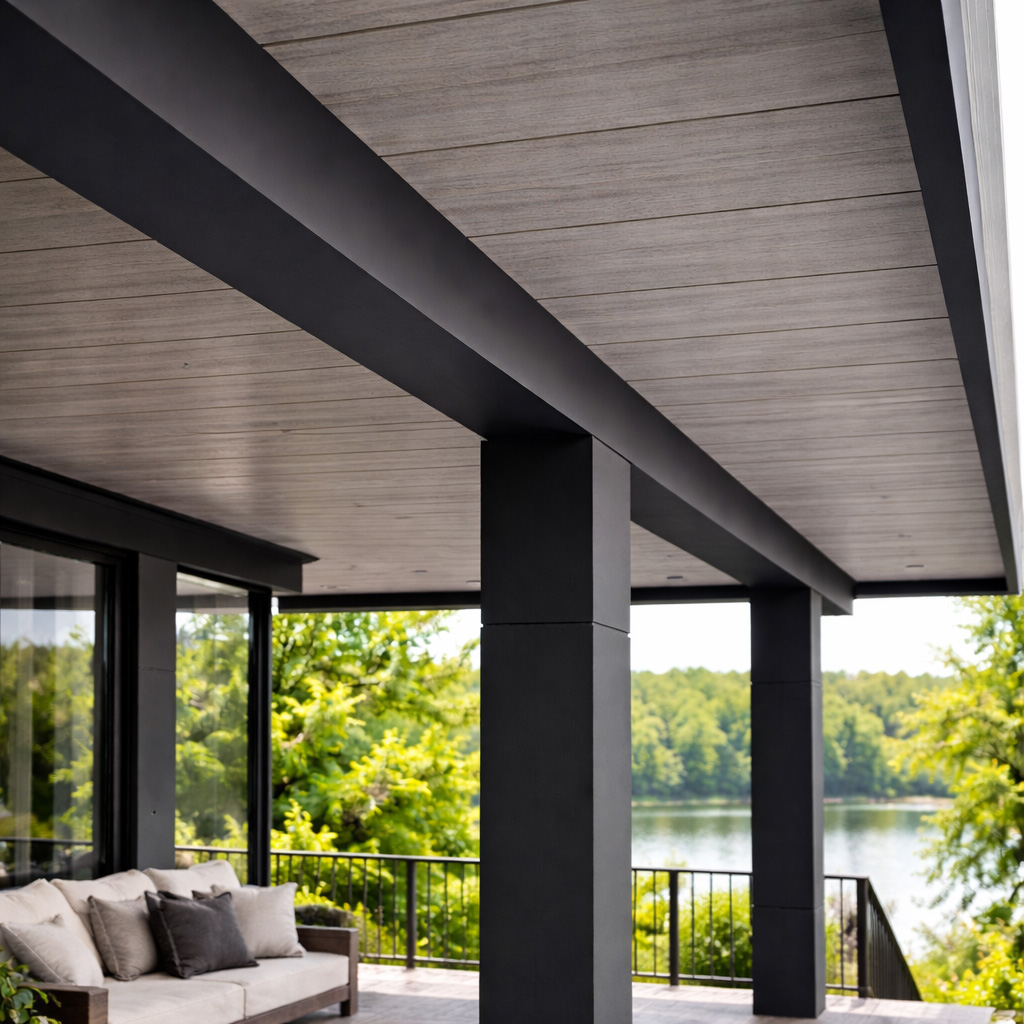
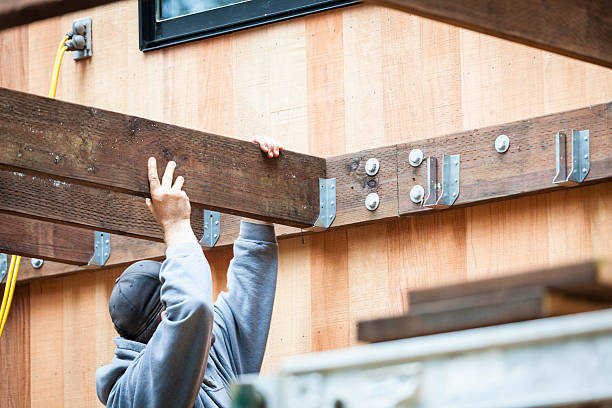
An exposed deck frame and a frame concealed above a finished ceiling do not necessarily experience the same air movement. Adding panels, trim, or an enclosure changes the space around the joists.
With a below-joist drainage system, rain may reach parts of the framing before landing on the drainage panels. The system must direct collected water away, while its design should also account for how the framing can dry afterward.
Ask your installer where air enters and leaves the framing area. A breeze moving through the patio below a solid ceiling does not necessarily mean air is exchanging around the joists above it.
Drainage and airflow work together
Drainage reduces the amount of water that remains in unwanted places. Ventilation supports air exchange around wood that may still become wet.
If a gutter is blocked, a leak repeatedly wets a joist, or water collects against a connection, address that water source first. Airflow should not be expected to compensate for ongoing wetting.
Likewise, a drainage system does not control outdoor humidity. Wood tends toward a moisture level that balances with surrounding conditions, so even sheltered framing responds to the weather. US Forest Service Research and Development
RainTeck is designed to combine undermount drainage with joist ventilation and a finished ceiling. Its approved installation details should explain how those functions work together for the particular deck. Any claims about drying speed require product-specific support.
What can homeowners do?
To support drying around deck framing:
- Keep drainage outlets clear so water can leave.
- Investigate persistent leaks and water collecting against wood.
- Preserve the ventilation details required by the manufacturer.
- Review proposed skirting or enclosure changes with the installer.
- Maintain access for inspecting the framing.
Watch for areas that remain damp longer than neighboring wood. That pattern can help identify a local problem, although it does not diagnose rot. Softness, visible deterioration, sagging, or questionable connections need evaluation by a qualified professional.
Air movement helps wet wood dry when the surrounding conditions allow moisture to leave. Paired with reliable drainage and sound installation details, it gives deck joists a better opportunity to release moisture between wetting events.
Sources
USDA Forest Products Laboratory. Air-Drying Time Estimates.
USDA Forest Products Laboratory. Air Drying of Lumber.
USDA Forest Products Laboratory. Wood Moisture Relations (2021).
USDA Forest Products Laboratory. Air Velocity and Wood Drying.
USDA Forest Products Laboratory. Drying and Moisture Control (2021).