When homeowners think about moisture around a deck, rain falling through the boards usually comes to mind first. But the ground beneath the deck can also contribute to damp conditions.
Wet soil and standing water release moisture into the air through evaporation. Depending on the deck’s height, enclosure, and exposure to wind, that moisture may disperse or linger near the structure.
Deck joists do not have to touch the ground to be affected by the moisture conditions beneath them. Understanding what happens below the framing can help you plan drainage improvements and a more usable outdoor space.
How Does Moisture Move From the Ground?
Water in damp soil can evaporate into the surrounding air. The Department of Energy identifies evaporation from the ground as a moisture pathway in its building-science guidance.
An open deck differs from an enclosed crawlspace, so crawlspace construction details should not automatically be applied beneath a deck. However, the underlying principle is relevant: exposed damp ground can supply water vapor to the space above it.
For a particular deck, how much that affects the framing depends on site conditions. A large, open space may exchange air readily, while a low or enclosed area needs closer evaluation.
Why Wood Responds to Humidity
Wood exchanges moisture with the surrounding air. Its moisture content responds to relative humidity, temperature, and how wet the wood already is.
That means moisture conditions around the framing matter even when rain is not directly reaching it. A sheltered joist can still absorb moisture from humid air.
Humidity alone does not establish that wood is rotting. The USDA distinguishes between moisture absorbed from humid air and liquid-water exposure from rain, condensation, or wet ground. Conditions that support surface mold are also different from those that support substantial decay.
The practical goal is to identify persistent wetting and understand whether the wood has an opportunity to dry.
Standing Water Can Make Drying More Difficult
A puddle beneath the deck is worth investigating, especially when it repeatedly returns.
USDA guidance on air-drying lumber explains that standing water in a drying yard reduces drying rates and increases the risk of staining. It also identifies vegetation and debris as potential obstructions to air movement.
Those findings concern lumber stacks rather than installed decks, but they support a useful planning principle: consider the ground surface, drainage, and airflow together.
For your deck, start by observing where water comes from and where it goes. Avoid assuming that adding a ceiling above the puddle will address the conditions below it.
Where Should Homeowners Look?
After rainfall, inspect the area from a safe, accessible location. Take photos and note whether the same wet spots remain after surrounding areas dry.
Useful questions include:
- Does a downspout discharge beneath the deck?
- Does runoff from the yard collect in a low spot?
- Are sprinklers repeatedly wetting the area?
- Does water flow back toward the house?
- Are leaves or stored materials holding moisture against posts or framing?
These observations give a contractor a starting point. They can also help distinguish a ground-drainage issue from water entering through the decking or at the house connection.
Start With the Water Source
Before choosing a ground covering or ventilation upgrade, investigate the source of recurring water.
University of Minnesota Extension recommends addressing surface drainage, grading, gutters, and downspouts when managing moisture around a house. Although its guidance focuses on basements, those exterior water-management checks are also useful when investigating wet ground beneath an attached deck.
Have a qualified contractor assess changes that involve grading, drainage installation, or work near deck footings. Ask where collected water will discharge and whether the proposed change affects the foundation or neighboring property.
Will Gravel or a Patio Solve the Problem?
A finished surface may make the area more practical to use, but ask how the complete installation handles water.
For gravel, discuss the underlying soil and where runoff will go. For a paved patio, review its drainage layout before installation. If a ground membrane is proposed, ask how it will be detailed so water does not collect on top of it.
The important decision is how the assembly works on your site. A surface selected mainly for appearance may leave the original water source unresolved.
Drainage Above the Patio Still Needs an Outlet
An under-deck drainage system collects water passing through the decking. Include its discharge point in the overall site plan.
Ask your installer where the gutter and downspout will send that water. The project should account for the ground beneath the deck as well as the sheltered space immediately below the ceiling.
RainTeck combines undermount drainage with joist ventilation and a finished appearance using woodgrain streaked vinyl panels. When planning an installation, discuss both the system’s water discharge and the existing moisture conditions around the deck. Site drainage and framing condition deserve attention before the space is finished.
Check the Wood as Well as the Ground
Persistent dampness is a reason to inspect nearby structural components. NADRA recommends checking joists, support posts, the ledger board, and locations that remain damp or surround fasteners.
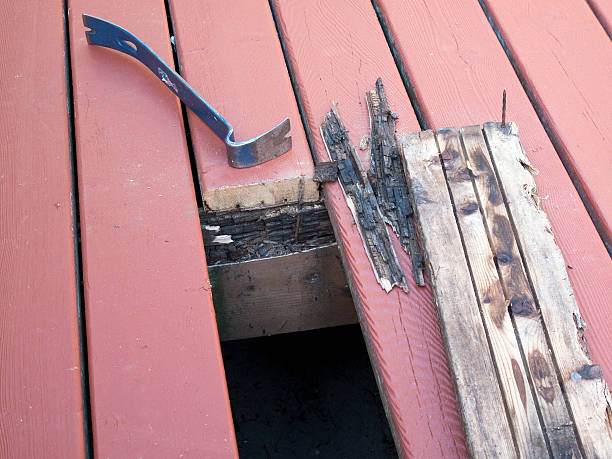
Soft or spongy wood, deteriorated connections, sagging, or unusual movement warrant professional evaluation. If the deck appears unstable, avoid using it and the area beneath it until it has been assessed.
A useful under-deck plan follows moisture from its source to its discharge point—and considers the wood along the way.
Sources
- U.S. Department of Energy. Introduction to Moisture Flow.
- USDA Forest Products Laboratory. Wood Moisture Relations.
- USDA Forest Products Laboratory. Biodeterioration of Wood.
- USDA Forest Products Laboratory. Air Drying of Lumber.
- University of Minnesota Extension. Moisture Causes and Solutions.
- NADRA. Check Your Deck Checklist.