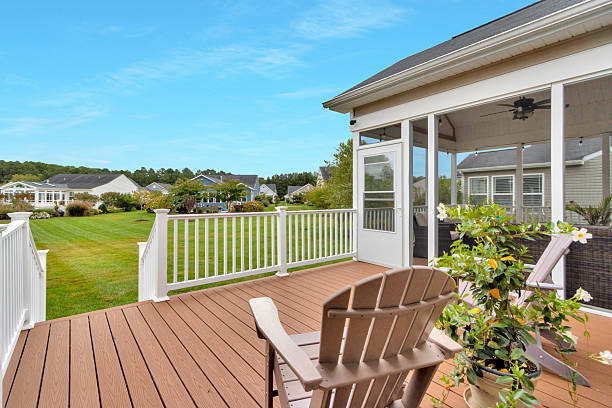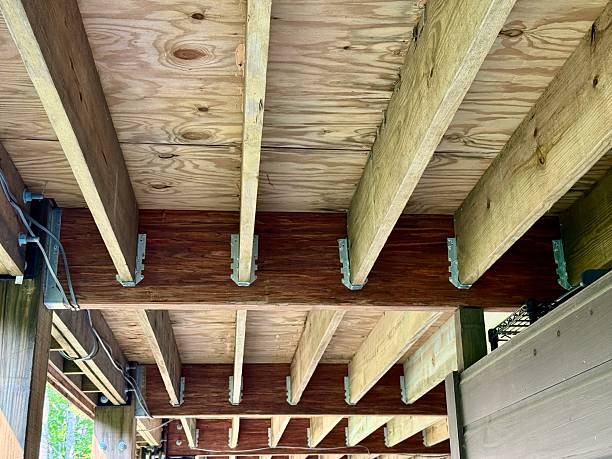
An elevated deck creates a sheltered space beneath it, but shelter does not eliminate moisture. Rain can pass through the gaps between deck boards, dampen the framing, and leave the joists wet after the storm has ended.
Ventilation matters because air movement is one of the factors that helps wet wood dry. When you add drainage panels or a finished ceiling beneath a deck, consider how air reaches the framing as well as where the rainwater goes. A comfortable patio below and sound framing above depend on different parts of the same moisture-management plan.
What does under-deck ventilation mean?
For this discussion, ventilation means air exchange around the deck’s joists and other framing. It is different from the breeze a ceiling fan creates for people sitting on the patio.
A fan below a finished ceiling may improve comfort without moving much air through the space above it. Likewise, ventilation built into a drainage assembly may serve the joists without creating a noticeable breeze in the seating area.
The useful question is: How does air reach the wood that can get wet?
How airflow supports drying
When wet wood releases moisture, that moisture moves into the surrounding air. Air movement can carry it away from the wood’s surface and replace that air with air from elsewhere.
However, airflow is only part of the process. Temperature, relative humidity, wood thickness, and the amount of water already in the wood also affect drying. The U.S. Forest Service identifies air circulation and weather conditions as important factors in air-drying lumber. Those principles help explain why framing can dry differently in different deck configurations. research.fs.usda.gov
A deck exposed to warm, dry conditions may dry more readily than one experiencing several cool, humid days. There is no universal drying time for deck joists.
Why does drying matter for wood framing?
Outdoor wood can get wet without immediately developing rot. The concern is moisture that persists under conditions favorable to decay fungi.
The Forest Products Laboratory explains that fungal growth depends on suitable moisture, temperature, and oxygen. Reducing prolonged wetness is therefore an important part of protecting wood in service. US Forest Service Research and Development
Ventilation helps address drying, but it does not replace sound construction or water management. If a leak continually wets a joist, fix the leak. If water collects against framing, address the drainage problem. Adding airflow alone should not be treated as a cure for an ongoing water source.
What changes when you add an under-deck ceiling?
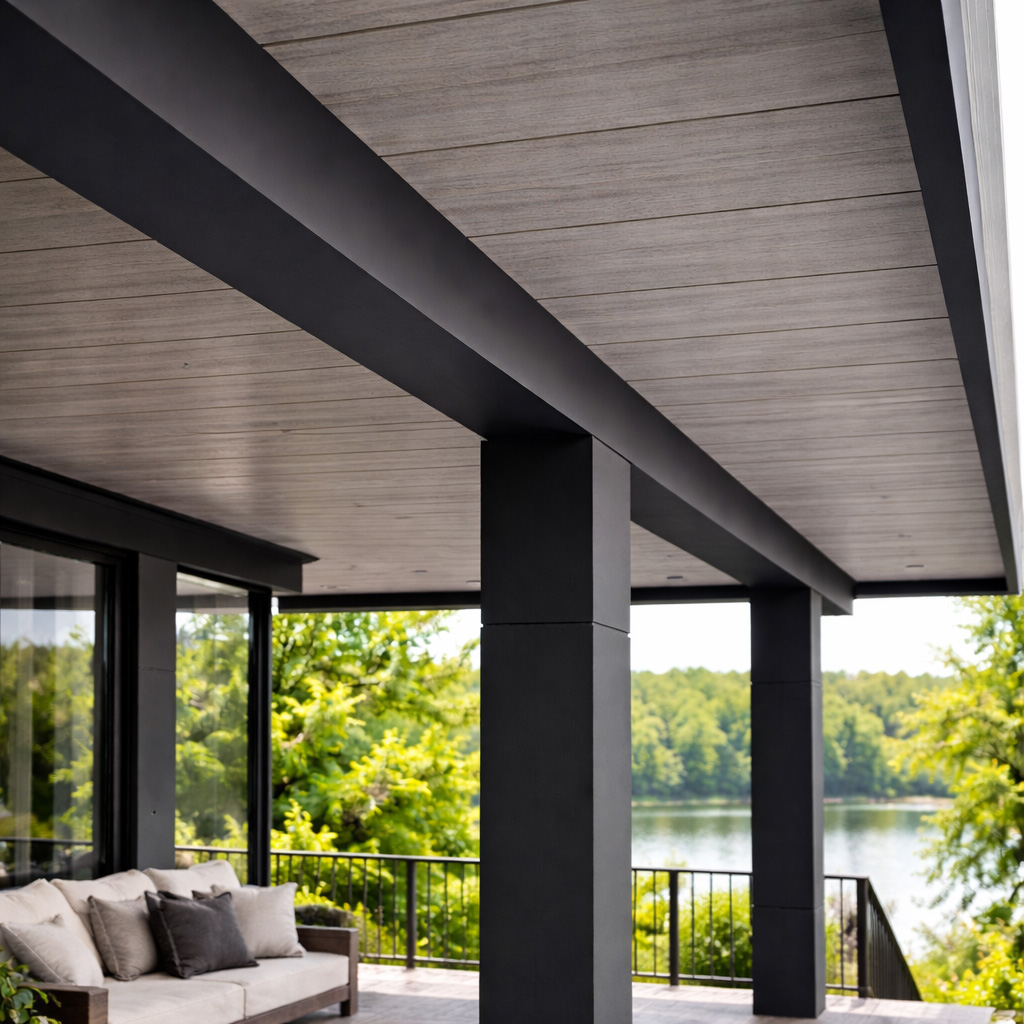
A finished ceiling changes the space around the joists. Depending on the system, it may conceal the framing, alter its exposure to moving air, and make inspection less straightforward.
That does not mean every ceiling traps moisture. It means the complete assembly needs to account for both water movement and drying.
With an above-joist drainage system, the drainage layer intercepts rain beneath the deck boards before it reaches much of the framing. With a below-joist system, rain may contact the joists before landing on the panels underneath. For the latter arrangement, ask how the system provides air exchange around the framing and which installation details support that function.
Follow the manufacturer’s instructions for the specific product. Do not assume that filling every opening around the ceiling will improve the installation, or that adding a few vents wherever convenient will provide the intended ventilation.
Does ventilation work in humid weather?
It can support drying when conditions allow moisture to leave the wood, but ventilation does not make outdoor air less humid.
Moving humid air around a wet joist does not guarantee rapid drying. The surrounding temperature and humidity influence both the drying rate and the moisture level wood can approach. Forest Service guidance on wood drying describes this relationship between wood moisture and the surrounding air. research.fs.usda.gov
This is why ventilation should be evaluated alongside drainage. Limiting unnecessary wetting reduces the amount of moisture the framing must release afterward.
What should homeowners look for?
When planning an under-deck project, ask the installer to explain:
- Where framing can get wet. Identify the likely rain path through the deck.
- How collected water leaves. Confirm the panel slope, gutter, outlet, and discharge location.
- How air reaches the joists. Ask which parts of the system provide ventilation.
- What must remain open. Check whether trim, skirting, or future enclosure would interfere with the approved design.
- How framing can be inspected. Plan access before the ceiling is finished.
These questions are especially useful if you intend to enclose part of the patio later. Changes to walls, screens, or perimeter finishes should be reviewed for compatibility with the drainage and ventilation design.
Where does RainTeck fit?
RainTeck is designed to combine undermount drainage, joist ventilation, and a finished ceiling made from woodgrain-streaked vinyl panels. Its approach considers the framing above the ceiling alongside the usable space below.
For a particular deck, the installer should confirm how the system’s ventilation provisions fit the joist layout and explain their operation using RainTeck’s approved technical guidance. Claims about drying speed, airflow coverage, or reduced decay risk need product-specific support.
Keep ventilation part of regular deck care
After installation, maintain the drainage outlets and ventilation features according to the manufacturer’s instructions. Investigate persistent wet spots, recurring leaks, or areas that remain damp longer than nearby framing.
If you notice soft wood, visible deterioration, or questionable connections, have a qualified professional assess the structure. A finished ceiling should not become a reason to overlook the deck supporting it.
Ventilation is one part of a durable under-deck project. Pair it with a reliable drainage path, sound framing, and access for inspection so the wood has opportunities to dry as weather conditions change.
Sources:
USDA Forest Products Laboratory. Air Drying of Lumber.
USDA Forest Products Laboratory. Air-Drying Time Estimates.
USDA Forest Products Laboratory. Biodeterioration of Wood (2021).
USDA Forest Products Laboratory. Drying and Moisture Control (2021).